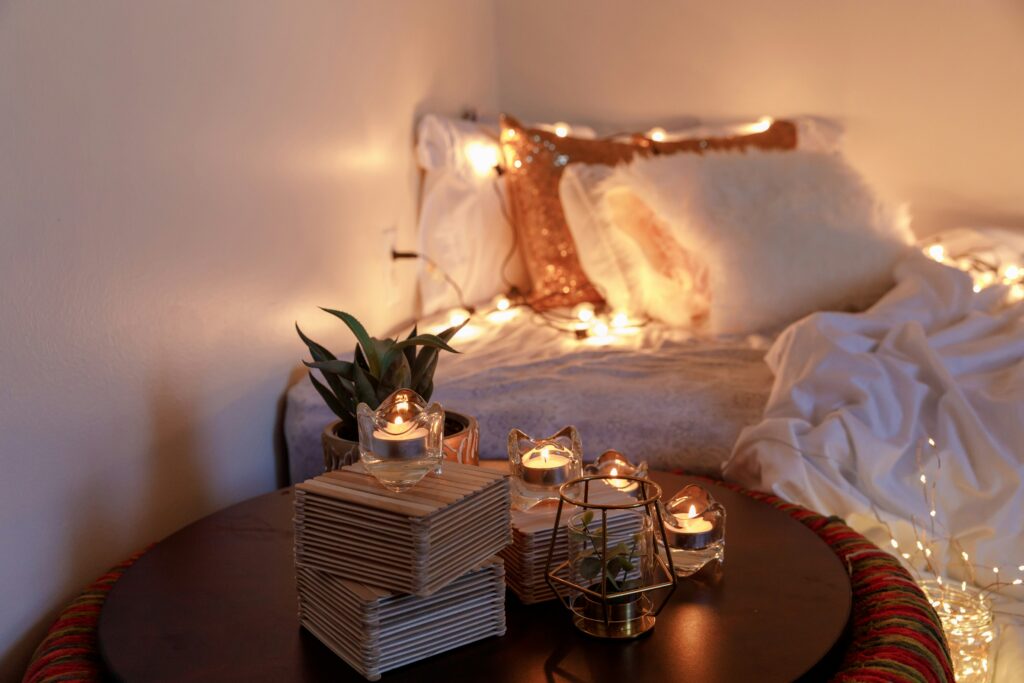

For two years, I lived with a living room that felt more like a waiting area than a home. White walls, a beige couch, a single overhead bulb casting the kind of light that makes everything look slightly clinical. I kept telling myself I would fix it — after the next paycheck, after the move, after I “figured out my style.”
Then, on a rainy Thursday evening, I ended up deep in an Amazon rabbit hole. Not shopping, just looking. And somewhere between a jute wall hanging and a faux fur blanket I didn’t know I needed, something clicked. I had a cart full of items. I checked out on impulse. And four days later, my living room became the room I actually wanted to be in.
This is the honest story of those products — what they are, why they worked, and how you can use them to do the same thing to any space that feels a little too empty, a little too cold, a little too much like a room rather than a place.
“Cozy isn’t a colour palette. It’s a feeling — and that feeling starts with texture, warmth, and things that look like they were chosen, not placed.”
Step 1: Give the wall something to say
The first and most overlooked mistake in a bare room is ignoring vertical space. Your walls are the largest canvas you have, and a white wall doesn’t whisper “minimal” — it whispers “unfinished.”
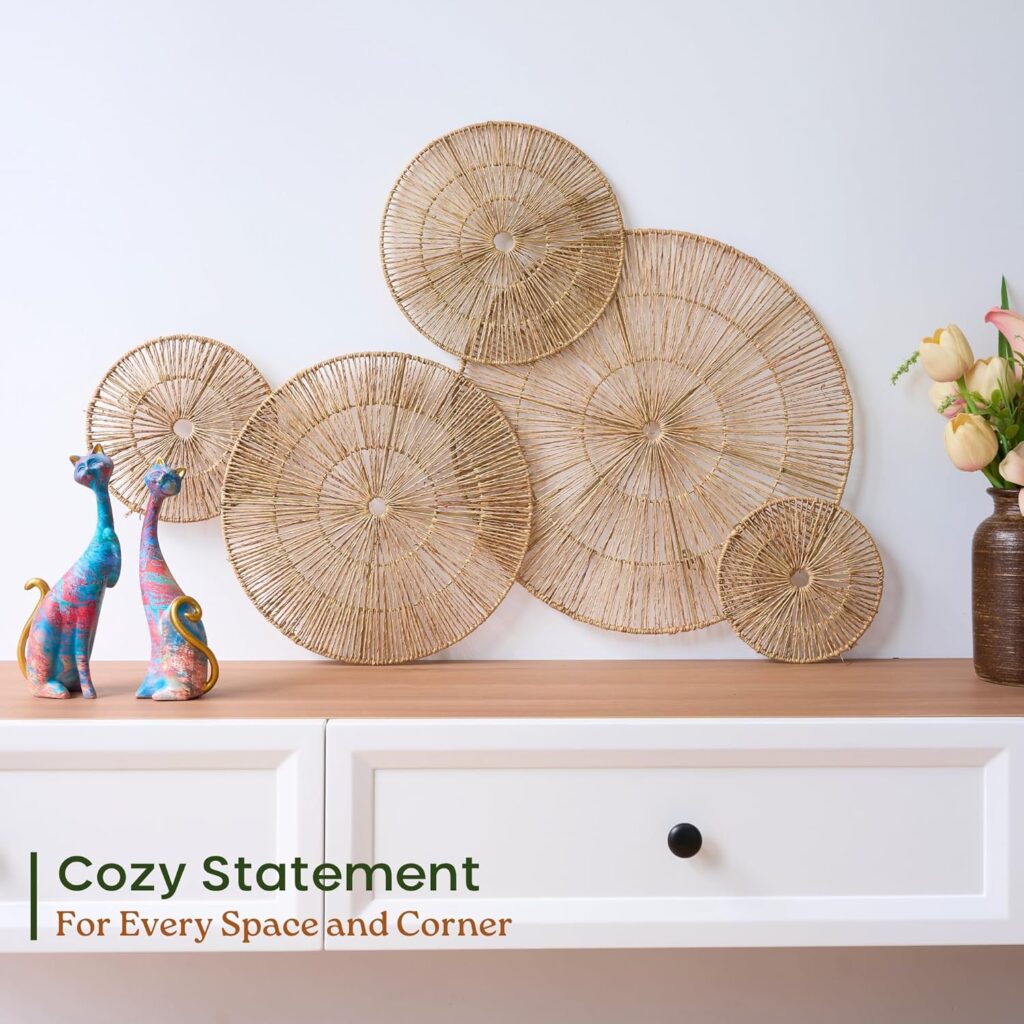
The first thing I added was a set of boho woven jute wall discs — overlapping circles of hand-twisted natural fibre in a warm golden tone. In the product photos, they look impressive. In person, stacked against my wall above the console table, they looked intentional. Like a decision. Like art. The kind of thing that makes a guest walk in and say, “oh, this is lovely” before they’ve even sat down.
Find 01
Boho Jute Woven Wall Décor Set
A set of handcrafted circular woven discs in natural jute with a warm golden finish. Arrange them in any overlapping cluster — no nails needed for the larger setups. Instantly adds artisan depth to any wall.
The thing about natural-material wall art is that it does triple duty: it adds visual texture, it softens sound (especially in rooms with hard floors), and it brings an organic warmth that no print or canvas can replicate. If you’ve never thought about jute as a décor material, start here. It pairs with almost everything — cream sofas, dark woods, terracotta accents, white shelving.
Pro Styling Tip : When hanging woven wall discs, don’t centre them perfectly on the wall. Offset the cluster slightly left or right of a key anchor point (like a sideboard or fireplace). Asymmetry reads as intentional in boho interiors.
Step 2: Make the sofa irresistible
A couch is furniture. A couch with a blanket draped over it is an invitation. There’s a reason every shelter magazine, every hotel lobby, every aspirational living room shot features a throw. It says: come here, sit down, stay awhile.
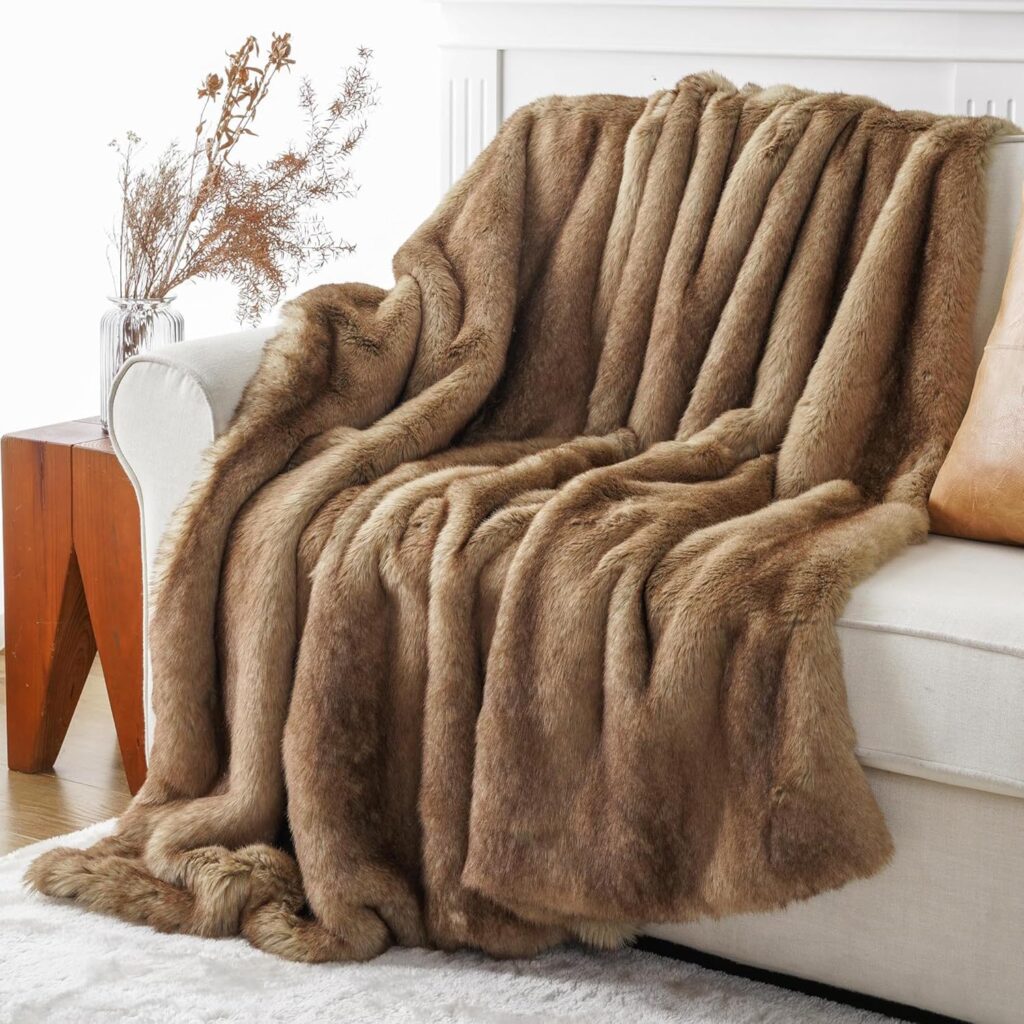
I’d tried cotton throws before. They look fine, they wash well, they do the job. But when I draped the faux fur blanket I’d ordered over the arm of my sofa for the first time and actually sat under it while reading — I understood what all those interior accounts meant when they talked about “sensory layering.” This blanket is thick without being heavy, incredibly soft without pilling, and patterned in a way that makes it look like it belongs in a much more expensive room.
Find 02
Heavyweight, ultra-soft faux fur in a warm sand and charcoal animal print. Generously sized for both bed and sofa use. The kind of blanket that people ask about — and then reluctantly hand back.
The trick with a statement throw is in how you place it, not just where. Resist the urge to fold it neatly. Pull it slightly off-centre, let one end drape toward the floor, bunch a corner casually over the armrest. Staged untidiness is an art form. It signals: someone lives here, beautifully.
“A blanket on a sofa is the indoor equivalent of a welcome mat. It says: this is a place to rest.”
Step 3: Fix the light
I cannot overstate how much bad lighting ruins interiors. Overhead lighting — the single-source ceiling light — flattens everything. It removes shadow, removes depth, and makes even the most thoughtfully decorated room feel like a school gymnasium.
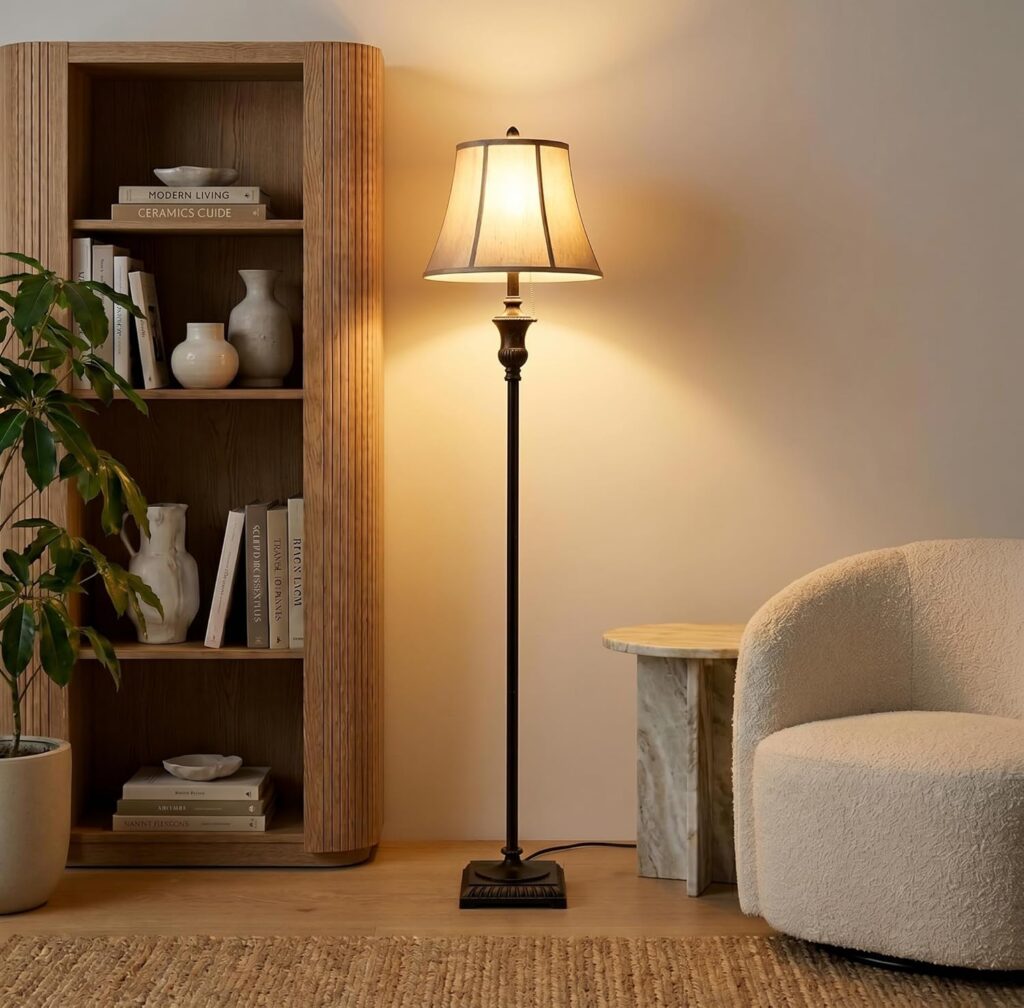
The solution isn’t just “add more light.” It’s about changing the angle and temperature of light. A floor lamp positioned in a corner creates what designers call “ambient pooling” — a warm glow that radiates upward and outward, creating depth and making a room feel larger and moodier at the same time.The vintage-style floor lamp I found checks every box: a dark bronze pole, an ornate urn-shaped collar, and a fabric shade that diffuses light into the warmest possible tone. It doesn’t light a room — it transforms one. I placed it between my bookshelf and my reading chair, and the corner it now illuminates looks like something from an editorial shoot.
Find 03
A classic standing lamp with a dark oil-rubbed bronze finish, ornate column detailing, and a fabric bell shade. Emits warm ambient light perfect for reading nooks, bedroom corners, and living areas. Works with LED bulbs.The floor lamp also works as a vertical element — it draws the eye upward, making ceilings feel higher. If you only make one change in a room, honestly, change the lighting first. Everything else will immediately look better.
Lighting Rule to Live By :Use a 2700K–3000K warm white LED bulb in any floor lamp you want to feel cosy. Bulbs above 4000K read as “office.” Always aim for three light sources in a living room: overhead (dimmed), a floor lamp, and a table or accent lamp.
Step 4: Pile on the pillows (the right way)
Cushions are where most people either go too minimal or too chaotic. The secret is tonal layering — sticking to one texture family in varying shades so everything feels curated rather than collected.
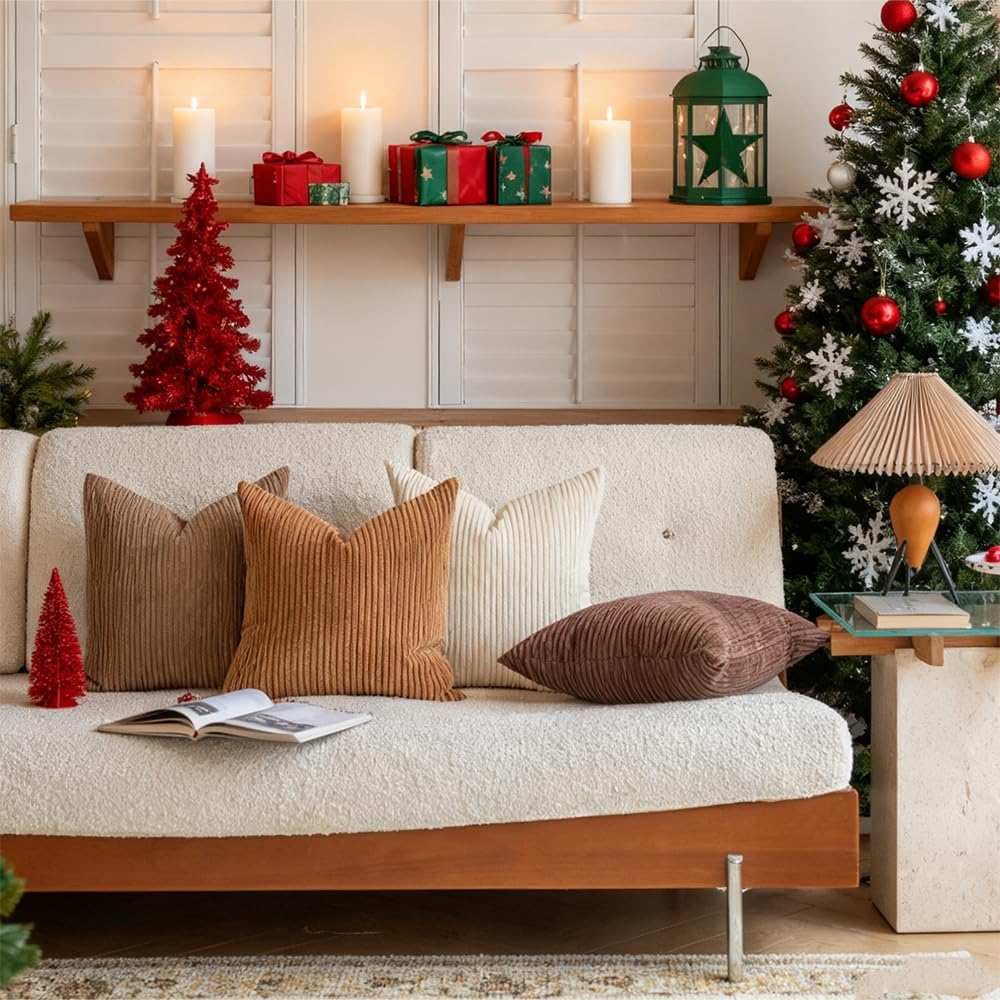
These corduroy ribbed cushion covers were the last thing I added to my sofa, and they were the element that made everything else cohere. Three sizes, three tones within the same warm family — dark chocolate, caramel, and soft cream — all in the same wide-wale corduroy texture. The result looks like a professional styled it, but it’s three pillow covers that cost less than a dinner out.
Find 04
Corduroy Ribbed Cushion Covers
Wide-wale corduroy pillow covers with a star-point envelope design. Available in earth tones from ivory to deep brown. Machine washable and available in multiple sizes. The texture photographs beautifully and feels even better in person.
The corduroy texture is particularly clever in a winter or transitional setup — it has warmth baked into its visual appearance even before you touch it. Paired with the faux fur blanket, the combination of textures on the sofa creates what designers call a “tactile hierarchy.” It pulls people in. It makes a sofa look like somewhere you actually want to collapse into.
The room, after
I want to be honest with you: I did not expect four items from an Amazon cart to make the difference they did. I thought I needed a renovation, new furniture, a designer’s eye, a bigger budget. What I actually needed was to address the four foundational layers that every cosy room has — wall interest, textural softness, layered lighting, and tactile cushioning.
The boho jute wall discs gave my wall a voice. The faux fur blanket made the sofa somewhere you actually want to sit. The floor lamp retired the overhead light and replaced flat brightness with depth and warmth. The corduroy cushions pulled every shade in the room into a conversation with each other.
Together, they cost less than most single-item furniture purchases. And the room they created is one I genuinely don’t want to leave in the evenings.
Your cosy room checklist
Layer the walls — add a natural-material statement piece above a key furniture anchor
Introduce a statement throw — drape casually, not folded; let it look lived-in
Replace overhead-only lighting — add a floor lamp in a corner with a 2700K bulb
Cushion in tonal groups — one texture family, three tones, three sizes
Use odd numbers — three cushions, three discs, three light sources. Odd groupings always read more natural
Mix materials, not colours — keep a tight palette but vary between jute, faux fur, fabric, and wood for richness.
Cosy isn’t a budget thing. It isn’t even really a style thing. It’s the result of paying attention to the senses — what you see when you walk in, what you feel when you sit down, what the light does to the shadows in the corners. These four finds didn’t just redecorate my room. They reminded me what it’s supposed to feel like to actually be home.
This article contains affiliate links to products on Amazon.com. If you purchase through these links, I may earn a small commission at no additional cost to you. All products were personally selected and the opinions are entirely my own.
Read more: How I Finally Turned My Cold, Empty Living Room Into the Coziest Corner in the House